

By Marcus Bell · Editor
Published
Answer in brief
When dropping collision and comprehensive coverage, drivers often assume their policy only includes third-party liability. However, adding uninsured motorist coverage is vital: it pays medical expenses and, in select states, vehicle repairs when an uninsured driver causes a collision.
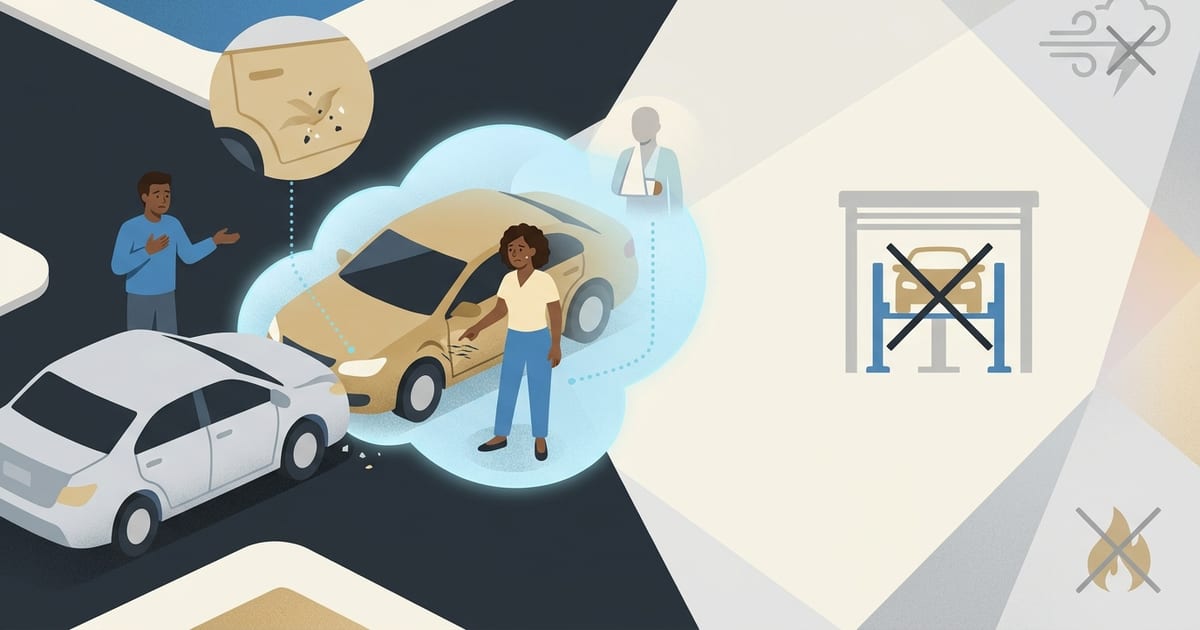
Drivers switching from full coverage to liability-only car insurance frequently cut optional coverages to minimize their annual premium. However, many policyholders mistakenly group uninsured/underinsured motorist (UM/UIM) coverage with physical damage protections like collision and comprehensive.
While third-party bodily injury liability and property damage liability pay exclusively for damage caused to others, UM/UIM protects the policyholder and passengers when an at-fault motorist lacks compulsory insurance.
The Scale of Uninsured Driving Across the United States
Driving without financial responsibility remains illegal in nearly every jurisdiction, yet millions of motorists operate without active coverage. According to research from the Insurance Research Council, approximately 14 percent of U.S. drivers—about one in seven—were uninsured in 2022.
Uninsured motorist frequency varies sharply by jurisdiction. The Insurance Research Council and Insurance Information Institute report substantial geographical disparities:
| State / Jurisdiction | Estimated Uninsured Driver Rate (2022/2023) |
|---|---|
| District of Columbia | 25.2% (2022) / 23.1% (2023) |
| New Mexico | 24.9% (2022) / 24.1% (2023) |
| Mississippi | 22.2% (2022) / 28.2% (2023) |
| Florida | 15.9% (2022) / 20.6% (2023) |
| California | 17.0% (2022) / 20.4% (2023) |
| Maine | 6.2% (2022) / 5.7% (2023) |
What Happens in a Crash Without Collision or UM Coverage?
If a policyholder holds strict liability-only coverage without collision or UM endorsements, an accident caused by an uninsured driver creates a severe coverage gap. Because the policyholder was not at fault, their own liability coverage will not trigger. Because collision was dropped, their insurer will not repair or replace the vehicle.
Recovering damages requires filing a civil lawsuit against the at-fault driver. However, individuals operating vehicles without insurance rarely possess unencumbered assets or wages sufficient to satisfy a substantial tort judgment.
How State Regulations Govern UM and UIM Endorsements
State statutes take varied approaches to uninsured motorist protection on basic policies. In Kansas, under K.S.A. 40-3107, motor vehicle policies must include both personal injury protection and uninsured/underinsured motorist coverage alongside standard 25/50/25 liability limits.
In North Carolina, under rating rules effective July 1, 2025, statutory liability minimums increased to 50/100/50, and underinsured motorist coverage is incorporated on all motor vehicle liability policies. Conversely, statutes in states like Hawaii (HRS § 431:10C-301) mandate that insurers offer bodily injury liability minimums ($40,000 per person / $80,000 per accident effective Jan 1, 2026) along with UM/UIM, but allow the policyholder to execute a written rejection.
Step-by-Step: Adding UM Protection to a Liability Policy
- 1
Review Current Policy Declarations
Examine your declarations page to confirm whether uninsured motorist bodily injury (UMBI) or uninsured motorist property damage (UMPD) is listed.
- 2
Match UM Limits to Liability Limits
Align your UMBI limits with your bodily injury liability limits (for example, $50,000/$100,000 or $100,000/$300,000) so you receive the same financial protection you provide to third parties.
- 3
Inquire About UMPD Options
If available in your state, inquire whether an uninsured motorist property damage endorsement can replace collision protection for hit-and-run or uninsured vehicle crashes on an older vehicle.
- 4
Compare Multi-Carrier Pricing
Gather quotes showing basic liability paired with UM/UIM endorsements to find the most competitive pricing structure.
Maintaining Smart Protection on Depreciated Vehicles
Dropping collision and comprehensive makes prudent sense when physical damage premiums eclipse the vehicle's depreciated worth. However, your medical well-being and passenger safety do not depreciate. Retaining uninsured motorist bodily injury coverage ensures that emergency room bills, surgical interventions, and lost compensation are handled even if the driver who struck you violates state financial responsibility laws.
Questions & answers
What is the difference between liability coverage and uninsured motorist coverage?
Liability coverage pays other people when you cause an accident. Uninsured motorist (UM) coverage pays you and your passengers if an uninsured or hit-and-run driver causes your injuries or property damage.
Does uninsured motorist coverage pay to fix my vehicle?
Uninsured motorist bodily injury (UMBI) only covers medical bills and injuries. In states that permit or mandate Uninsured Motorist Property Damage (UMPD), vehicle repairs may be covered up to the stated policy limit.
Can I decline uninsured motorist coverage to save money?
In states where UM is mandatory, you cannot decline it. In states where it is optional, you must typically sign an explicit written rejection form. However, declining it leaves you unprotected against roughly 14 percent of drivers nationwide.
Terms: Uninsured/underinsured motorist (UM/UIM), Bodily injury liability (BI), Property damage liability (PD), Collision coverage, Comprehensive coverage
Sources and references
Legal figures on this page (minimum limits, filing periods, statutory benefits) are checked against the primary law or the state insurance regulator listed below. Links and figures last verified Nov 2026.
- K.S.A. 40-3107 — required motor vehicle liability policy contents — Kansas Office of Revisor of Statutes, K.S.A. 40-3107Primary lawMinimum 25/50/25 liability plus mandatory PIP and uninsured/underinsured motorist coverage.
- HRS § 431:10C-301 — required motor vehicle policy coverage — Hawaii State Legislature, HRS § 431:10C-301Primary lawLiability of at least $40,000 per person / $80,000 per accident and $20,000 property damage (effective 1 Jan 2026 under Act 138 of 2024); PIP $10,000; UM/UIM offered with written rejection.
- Changes to the rating of automobile insurance policies, effective July 1, 2025 — North Carolina Department of Insurance (2025)State insurance regulatorMinimum limits rose from 30/60/25 to 50/100/50 for policies issued or renewed on/after 1 July 2025; underinsured motorist coverage now included on all policies.
- 14 percent of U.S. drivers were uninsured in 2022 — Insurance Research Council (2023)Independent researchAbout one in seven drivers was uninsured in 2022; highest D.C. 25.2%, New Mexico 24.9%, Mississippi 22.2%; lowest Wyoming 5.9%, Maine 6.2%, Idaho 6.2%. Method: ratio of UM to BI claim frequencies.
- Estimated percentage of uninsured motorists by state, 2017–2023 — Insurance Information Institute (2025)Statistical dataIRC time series by state; 2023: Mississippi 28.2%, New Mexico 24.1%, D.C. 23.1%, Michigan 22.3%, Florida 20.6%, California 20.4%, Texas 14.5%; lowest Maine 5.7%.
- Automobile financial responsibility limits by state — Insurance Information Institute (2023)Statistical dataCompulsory coverages and minimum liability limits by state (table dated December 2023 — several states have raised limits since; see statute entries).
- What is covered by a basic auto insurance policy? — Insurance Information InstituteConsumer guidanceDefines bodily injury and property damage liability, MedPay, PIP, uninsured/underinsured motorist, collision, comprehensive and glass coverage.
- How much auto coverage do I need? — Insurance Information InstituteConsumer guidanceWhy state minimums are a floor; choosing liability limits that protect assets; when collision and comprehensive are worth keeping.
Practical guidance on this page is original editorial work. Cited sources support factual statements and do not endorse this site. Dollar ranges described as typical or illustrative are editorial estimates, not figures from these sources.